Sunday, 17 March 2019
Saturday, 16 March 2019

Friday, 15 March 2019
MY IDEAL JOB
My ideal job in the future is to be a English teacher because I like a lot English idiom and I'd like to continiou study English all that I can and I enjoy speaking English.
I can travel to a lot of countries that speak in English and I can undrstand they well.
I like English since I begin to study it and I think that if like a lot is more easy to study that in the future.

I can travel to a lot of countries that speak in English and I can undrstand they well.
I like English since I begin to study it and I think that if like a lot is more easy to study that in the future.
Monday, 11 March 2019
H. PROYECT |||
1. What period does the Middle Ages cover?
For the 5th century to 15th century.
2. What general characteristics does it have (according to the teacher´s comments)?
Invasions, population distribution and urbanisation.
3.What is the main difference between"troubadours and minstrels"?
The difference between a troubadour and a minstrel is that troubadour is an itinerant travelling entertainer who would sing and recite poetry, often to his own musical accompaniment.
4.Pay attention to these two monuments(a Romantic church and a Gothic cathedral).
What are their differences heights have in common with the music evaluation of those centuries?
The first more tall, light and the arcs are very tall, while the second in more common, dark and with low arcs.


5.What do you feel looking at these pictures (taken from the 19th century but directly linked to the Middle Ages)? In your own opinion, what kind of music could accompany these images?
I think that these two persons are falling in love, I think that the music that accompany this pictures can be classical music.
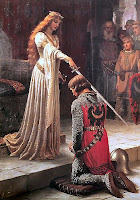
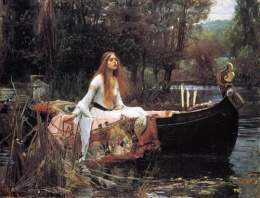

6. Why does Heavy Metal music love this aesthetic?
I think that they like that because are very heavy and look strong and some fantastic.
:format(jpeg):mode_rgb():quality(90)/discogs-images/R-1992917-1257286845.jpeg.jpg)


For the 5th century to 15th century.
2. What general characteristics does it have (according to the teacher´s comments)?
Invasions, population distribution and urbanisation.
3.What is the main difference between"troubadours and minstrels"?
The difference between a troubadour and a minstrel is that troubadour is an itinerant travelling entertainer who would sing and recite poetry, often to his own musical accompaniment.
4.Pay attention to these two monuments(a Romantic church and a Gothic cathedral).
What are their differences heights have in common with the music evaluation of those centuries?
The first more tall, light and the arcs are very tall, while the second in more common, dark and with low arcs.
5.What do you feel looking at these pictures (taken from the 19th century but directly linked to the Middle Ages)? In your own opinion, what kind of music could accompany these images?
I think that these two persons are falling in love, I think that the music that accompany this pictures can be classical music.
6. Why does Heavy Metal music love this aesthetic?
I think that they like that because are very heavy and look strong and some fantastic.
Thursday, 7 March 2019
Saturday, 23 February 2019
P.E. PROYECT-YOU ARE WHAT YOU EAT
I talk about what I eat some days ago:

For brakfast I drank a cup of milk with colacao and I ate a toast with oil:
For half-morning I ate a ham sandwich and I drank water.
For lunch lentils with vegetables and ribs and for dessert some pineapple.
For mid-afternoon I ate a patty.
And for dinner I ate a hamburguer and a yogurt.
WHAT CAN I IMPROVE TO EAT MORE HEALTHY:
For breakfast instead of colacao that have a lot of sugar I can eat cocoa and some fruit.
For half-morning I can eat anything more healthy like some with corn or with any type of corn or rice.
For lunch I think that lentils with vegetables are healthy but I can eat a sald too, and for dessert fruit is well.
For mid-afternoon I can eat fruit and something more natural.
And for dinner I can eat a salad too and instead of a yogurt with sugar and other things that have it, a natural yogurt.
I can include some fish and pasta, and I try to eat less sweets and snacks and eat more fruit.
Sunday, 17 February 2019
MUSIC SELF-ASSESMENT
1- WHAT CAN I DO THAT I COULDN'T DO BEFORE?: I can play the recorder
2- WHAT DO I LIKE MOST?: I like sing
3- WHAT DO I DO WELL?: I play the recorder well
4- WHAT AM I CONFUSED ABOUT?: I am confused about how to play the guitar
5- WHAT DO I NEED HELP WITH?: I need help with intervals
6- WHAT DO I DO IN ENGLISH AND/OR MUSIC OUTSIDE THE CLASS?: I´m going to english classes
7- WHAT DO I NEED TO IMPROVE?: I need to improve de recorder
8- WHAT DID I LEARN ABOUT CULTURE?: I learn about a lot of singers and compositors important in the history
2- WHAT DO I LIKE MOST?: I like sing
3- WHAT DO I DO WELL?: I play the recorder well
4- WHAT AM I CONFUSED ABOUT?: I am confused about how to play the guitar
5- WHAT DO I NEED HELP WITH?: I need help with intervals
6- WHAT DO I DO IN ENGLISH AND/OR MUSIC OUTSIDE THE CLASS?: I´m going to english classes
7- WHAT DO I NEED TO IMPROVE?: I need to improve de recorder
8- WHAT DID I LEARN ABOUT CULTURE?: I learn about a lot of singers and compositors important in the history
Saturday, 16 February 2019
MUSIC VOCABULARY 2nd TERM
Musical meaning: significado musical. Dot: puntillo.
Rhythm: ritmo. Ligature: ligadura.
Dot: puntillo. Snare drum: caja.
Drums: batería. Clap: palmada.
Bar: compás (el espacio del pentagrama). Orchestra: orquesta.
Time signature: compás (la fracción numérica). Conductor: director.
Tempo: "tempo". Ensemble: formación musical.
Chordophone: cordófono. Aerophone: aerófono.
String: cuerda. Bow: arco.
Rub: frotar. Pluck: pulsa, puntear.
Guitar pick: púa. Viola: viola.
Violoncello: violonchelo. Double bass: contrabajo.
Tuning peg: clavija. Harp: arpa.
Brass: viento metal. Woodwind: viento madera.
Mouthpiece: boquilla. Saxophone: saxofón.
Oboe: oboe. Clarinet: clarinete.
Trumpet: trompeta. French horn: trompa.
Percussion: percusión. Amplifier: amplificador.
Soprano: soprano. Mezzo-soprano: mezzo-soprano.
Tenor: tenor. Baritone: barítono.
Grand piano: piano "de cola". Kettle drum: timbal.
Rhythm: ritmo. Ligature: ligadura.
Dot: puntillo. Snare drum: caja.
Drums: batería. Clap: palmada.
Bar: compás (el espacio del pentagrama). Orchestra: orquesta.
Time signature: compás (la fracción numérica). Conductor: director.
Tempo: "tempo". Ensemble: formación musical.
Chordophone: cordófono. Aerophone: aerófono.
String: cuerda. Bow: arco.
Rub: frotar. Pluck: pulsa, puntear.
Guitar pick: púa. Viola: viola.
Violoncello: violonchelo. Double bass: contrabajo.
Tuning peg: clavija. Harp: arpa.
Brass: viento metal. Woodwind: viento madera.
Mouthpiece: boquilla. Saxophone: saxofón.
Oboe: oboe. Clarinet: clarinete.
Trumpet: trompeta. French horn: trompa.
Percussion: percusión. Amplifier: amplificador.
Soprano: soprano. Mezzo-soprano: mezzo-soprano.
Tenor: tenor. Baritone: barítono.
Grand piano: piano "de cola". Kettle drum: timbal.
Tuesday, 18 December 2018
SELF-ASSESMENT 1ST TERM
- What can I do that I couldn't do before? I can write best a letter
- Can I understand information from LISTENINGS? Yes, because I understand best
- Can I WRITE a brief paragraph ? Yes
- Can I SPEAK using vocabulary and grammar learnt this term? Yes
- Can I understand information from READINGS? Sometimes because I have some difficulties
- What do I like most? I like most the projects
- What do I do well? I can do well reading, listening and writting
- What am I confused about? about nothing
- What do I need help with? I need help with reading and writting
- What do I do in English outside the class?
- What do I need to improve? The reading and writing and a little for speaking
- What did I learn about culture? I learn a lot of the life in the past
Saturday, 8 December 2018
Tuesday, 27 November 2018
PROYECT MUSIC II
Who is Vivaldi?
Antonio Lucio Vivaldi he was born in Venecia, on the 4 of march in the 1678-Viena, he died on the 28 of july in the 1741. He was a Venecian baroque composer, violinist, businessman, teacher and priest. His mastery is reflected in the most important genre of the concert. He composed some more 770 works, including more than 400 concerts and about 46 operas. He is especially known, a popular level, for being the author of the series of concerts for violin and orchestra" The Four Seasons".
This is the song of the four seasons:
Subscribe to:
Posts (Atom)